Enterprises are consolidating and connecting their data to fuel agentic AI’s information demands. Next, they need to ask whether the infrastructure behind it is ready to support agentic AI’s workload.
Often when AI agents move from pilot to production, one of the first constraints is not the model. It’s how quickly and efficiently agents can reach and process data to produce valuable results. An agent may retrieve customer data, query inventory, call an API, analyze records, generate a response and then verify the result. Multiply that activity across hundreds or thousands of agents and demand rises quickly across databases, analytics platforms and business applications.
That creates a practical question for CIOs and IT executives: Can the systems that process enterprise data handle this additional work without driving up latency, cost, power consumption or floor-space requirements?
Added Agent Requests Affect Infrastructure’s Latency, Performance
Modern enterprise data may reside across operational databases, data warehouses, data lakes and industry-specific applications. After data consolidation and organization – the first steps toward AI readiness – agents need reliable, governed access and enough compute capacity to process a growing volume of requests.
To better understand this impact, consider an enterprise with multiple data stores handling 100,000 requests an hour, even before agents are deployed. As the business deploys multiple agents across multiple workloads and teams, tasks and data requests grow in volume. If agents complete 10,000 tasks an hour and each task adds 10 data requests, the total reaches 200,000 requests an hour – double the original volume. At 20 requests per task, it reaches 300,000 requests in that hour – three times the original. Push to 40 requests per task, and demand can reach 500,000 requests an hour.
When you accept that a single task can include checking customer records, retrieving information, querying databases, calling APIs, orchestrating tasks, applying business rules, running analytics and then revisiting data to verify a result, you see how requests can accumulate quickly.
Match the Processor to the Workload
Enterprise data environments run a wide range of workloads, from transactional databases and analytics to virtualization and inference embedded in business applications. While reasoning on larger generative AI workloads benefits from accelerators, much of the surrounding workflows run best on CPUs. Even some AI inference embedded in enterprise applications runs efficiently on CPUs close to the data.
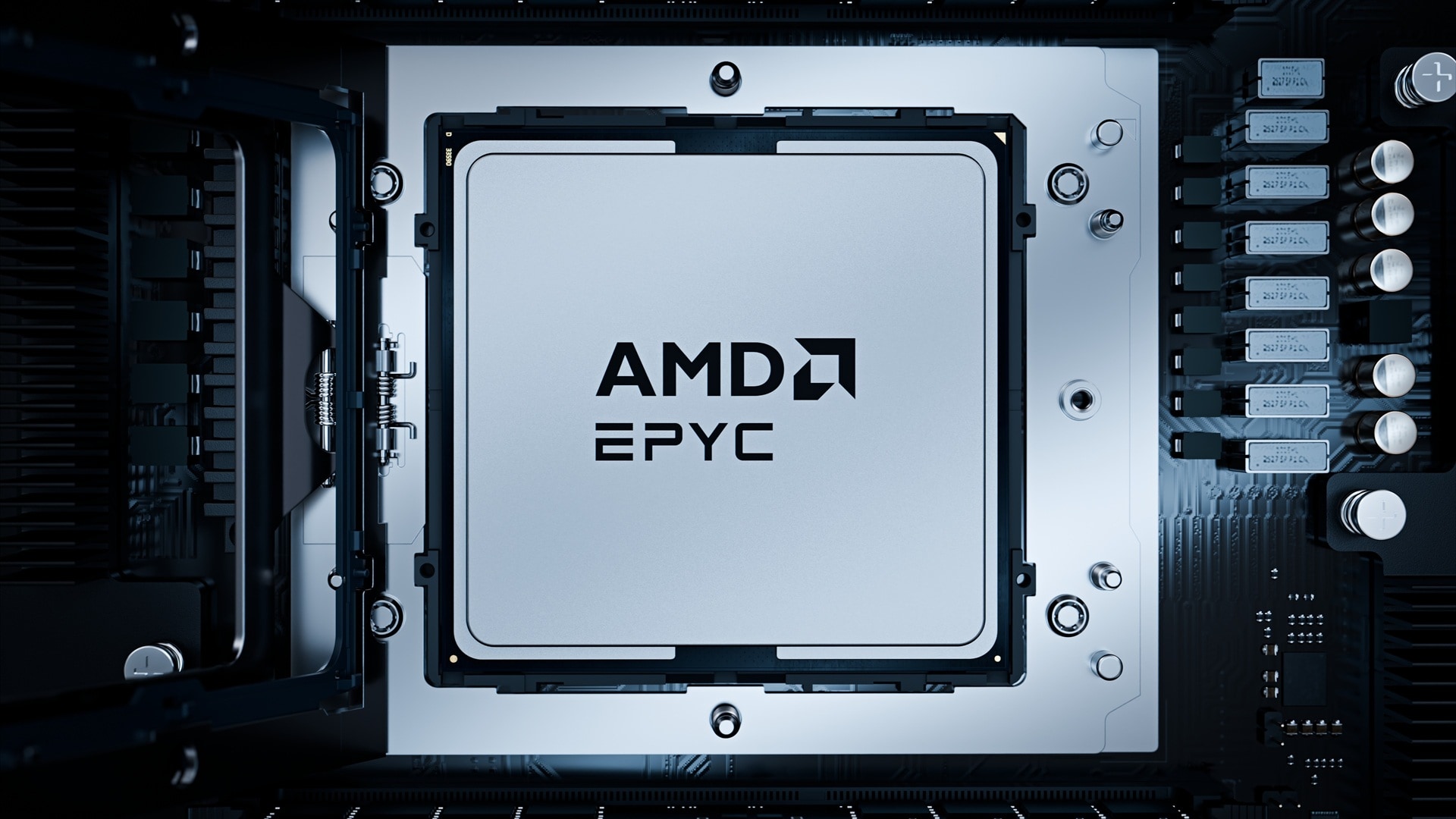
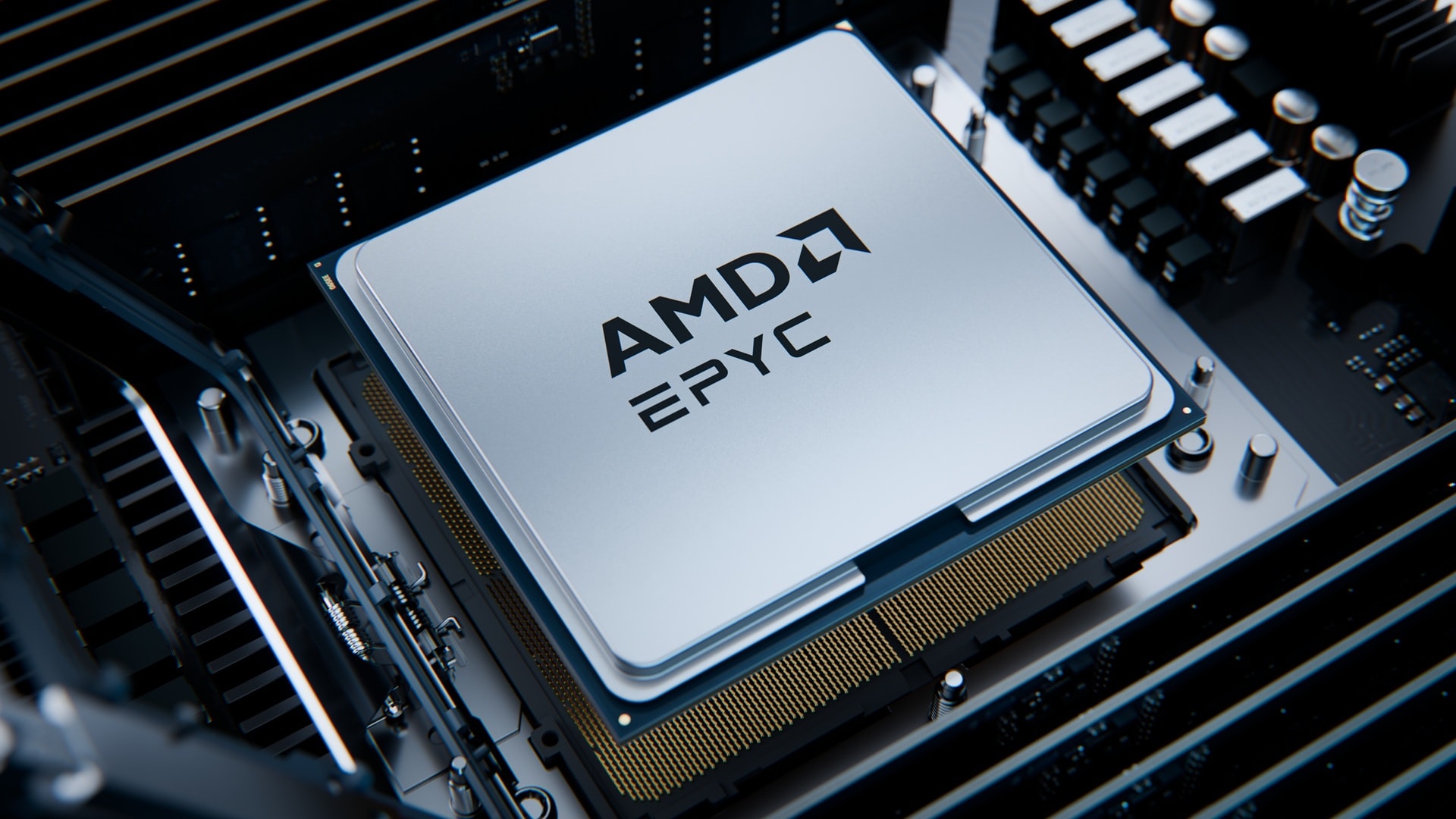
AMD innovation in enterprise AI and CPU performance positions the 5th Gen AMD EPYC™ processor as the right choice for agentic workloads with its high memory bandwidth and capacity for large datasets, frequency-optimized options up to 5 gigahertz for workloads that depend on strong per-core performance, and configurations up to 192 cores to consolidate more workloads on fewer servers. And the 6th Gen AMD EPYC™ 9006 Series CPUs extend that density to as many as 256 cores per socket, providing unmatched performance designed for agentic workload deployment and orchestration.
Per-core performance is especially important for software licensed by the number of processor cores, including some Oracle and Microsoft SQL Server deployments. In those cases, completing more work with each licensed core can reduce overall software costs. (This benefit applies specifically to core-based licensing and does not affect software priced by users, consumption or other measures.)
In AMD testing, an EPYC-based server completed a Microsoft SQL Server analytics workload with estimated licensing costs up to 38% lower than the evaluated Intel Xeon platform.1 On AWS, EPYC-powered instances delivered up to 36% lower operating costs for the tested Microsoft SQL Server workload, including the software license.2
More Work with Fewer Servers
Higher CPU performance and core density – hallmarks of the AMD EPYC™ family of server processors – help ensure that enterprises can be confident their infrastructure is ready to move from pilot to production on agentic workloads.
In one modeled consolidation scenario, 347 two-socket servers powered by Intel® Xeon® Platinum 8592+ processors were compared with 131 two-socket servers powered by AMD EPYC™ 9965 processors. The AMD configuration was estimated to deliver approximately the same aggregate SPECrate®2017_int_base performance with 216 fewer servers – a 62% reduction. The model also estimated 45% lower power consumption and a 44% lower three-year total cost of ownership.3
These advantages take on greater importance as agents generate more queries and application requests. More performance per server can help enterprises accommodate growth while limiting the need for additional hardware, power and floor space.
The performance advantage extends across widely used database and analytics workloads. Compared with the evaluated Intel Xeon-based platforms, AMD EPYC processors delivered:
Up to 1.63x the transactions per second on Microsoft SQL Server in the cloud.2
Up to 1.6x the performance on Databricks SQL analytics.4
About 1.3x higher throughput on Microsoft SQL Server analytics.1
The Shift Is Already Underway
This isn’t a hypothetical: Cloud providers and database vendors are already building for the demand that agentic AI creates.
AWS added AMD EPYC-powered instance support for Amazon RDS for SQL Server earlier this year. It then extended that support further with AMD-based R8a and M8a database instances across Amazon Aurora and Amazon RDS, now covering PostgreSQL, MySQL and MariaDB as well.5
Oracle is building for the same demand. In March, it announced new agentic AI capabilities for Oracle AI Database, including Exadata Powered AI Search, which Oracle says accelerates queries for high-volume, multistep agentic workloads.6
Across the industry, as agents move from pilot to production, the database and data lake layer is often the first place enterprises discover they need more capacity. And the platforms they already run on are responding to that demand. Organizations moving in this direction now won’t be caught short when agentic workloads hit full production scale.
AI Readiness and Agentic Workflows Depend on Infrastructure
Organizing enterprise data is necessary, but it’s just Step 1. As agents move into production, success will be gauged by whether systems using that data can process greater requests while meeting each business’s requirements for performance, cost and power.
AMD EPYC server processors provide the performance, core density and memory capabilities needed to run the databases, analytics platforms and enterprise applications that agents depend on. By matching each part of the AI workflow to the right compute, enterprises can turn years of accumulated data into faster decisions and practical business results.
More: Read Dan McNamara’s previous blogs:
-
9xx5-221. TPC-H analytics workload based on internal AMD measurements as of 6/16/2025. This workload is derived from the TPC-H Benchmark and is not comparable to published TPC-H results, as this implementation does not comply with all TPC-H requirements. Workload configs: SQL Server 2022 CU 11, 32-core node, SF3000, TPC-H Kit MSTPCH 2.18.0-2600. Estimated licensing costs for running 10M queries: 2P Intel Xeon 6544Y platform $2,344,822 vs. 1P AMD EPYC 9175F platform $1,463,313. Microsoft SQL Server 2022 license pricing: $15,123 per 2-core pack. TPC, TPC Benchmark and TPC-H are trademarks of the Transaction Processing Performance Council.
-
9xx5C-087. Testing by AMD Performance Labs as of 1/30/2026. R8a.xlarge score comparison to R8i.xlarge running SQL Server (TPC_E). Note: For AWS instances, AMD instance R8a.xl default is SMT off and Intel instance R8i.xl default is HT on; testing done using defaults. Performance differences (normalized to R8i baseline): 1.63x performance, 36% OpEx savings with SQL Server license. On-demand hourly pricing from aws.amazon.com/ec2/pricing/on-demand (us-east) as of 1/30/2026: R8A.XL $0.3195, R8i.XL $0.2778. OpEx savings calculated from relative runtime and instance cost ratio. The SQL Server TPC-E derivative is derived from the TPC-E Benchmark standard and is not comparable to published TPC-E results, as it does not comply with the TPC-E Benchmark standard.
-
9xx5TCO-002A: This scenario contains many assumptions and estimates and, while based on AMD internal research and best approximations, should be considered an example for information purposes only, and not used as a basis for decision making over actual testing. The AMD Server & Greenhouse Gas Emissions TCO (total cost of ownership) Estimator Tool - version 1.12, compares the selected AMD EPYC™ and Intel® Xeon® CPU based server solutions required to deliver a TOTAL_PERFORMANCE of 391000 units of SPECrate2017_int_base performance as of October 10, 2024. This estimation compares a legacy 2P Intel Xeon 28 core Platinum_8280 based server with a score of 391 versus 2P EPYC 9965 (192C) powered server with a score of 3000 (https://www.spec.org/cpu2017/results/res2024q4/cpu2017-20240923-44837.pdf) along with a comparison upgrade to a 2P Intel Xeon Platinum 8592+ (64C) based server with a score of 1130 (https://spec.org/cpu2017/results/res2024q3/cpu2017-20240701-43948.pdf). Actual SPECrate®2017_int_base score for 2P EPYC 9965 will vary based on OEM publications. Environmental impact estimates made leveraging this data, using the Country / Region specific electricity factors from the 2024 International Country Specific Electricity Factors 10 – July 2024, and the United States Environmental Protection Agency 'Greenhouse Gas Equivalencies Calculator'. For additional details, see https://www.amd.com/en/legal/claims/epyc.html#q=9xx5TCO-002A.
-
9xx5C-111 / 9xx5C-112. Testing by AMD Performance Labs as of June 3, 2026. Performance results based on a Databricks SQL Analytics workload derived from the TPC-DS SF3000 benchmark; not compliant with TPC-DS specifications and not comparable to official TPC-DS results. Results normalized to Edsv6 instance: 9xx5C-111 (E8adsv7) = 1.43x performance, 1.61x perf/$; 9xx5C-112 (F8adsv7) = 1.62x performance, 1.54x perf/$. Azure pay-as-you-go pricing as of 6/3/2026, US East, Linux, RHEL, Standard Tier.
-
AWS, "Amazon RDS for SQL Server now supports AMD-based instances," May 2026. https://aws.amazon.com/about-aws/whats-new/2026/05/rds-sqlserver-supports-amd-instances/; AWS, "Amazon Aurora and Amazon RDS now support R8a instances," September 2026. https://aws.amazon.com/about-aws/whats-new/2026/09/aurora-rds-amd-r8a/; AWS, "Amazon Aurora and Amazon RDS now support M8a instances," September 2026. https://aws.amazon.com/about-aws/whats-new/2026/09/aurora-rds-amd-m8a/; see also AWS, "AWS and AMD bring 5th generation AMD EPYC processors to Amazon Aurora and Amazon RDS," AWS Database Blog. https://aws.amazon.com/blogs/database/aws-and-amd-bring-5th-generation-amd-epyc-processors-to-amazon-aurora-and-amazon-rds/
-
Oracle, "Oracle Unveils AI Database Agentic Innovations for Business Data," press release, March 24, 2026. https://www.oracle.com/news/announcement/oracle-unveils-ai-database-agentic-innovations-for-business-data-2026-03-24/
Press inquiries: corporate.pressinquiry@amd.com