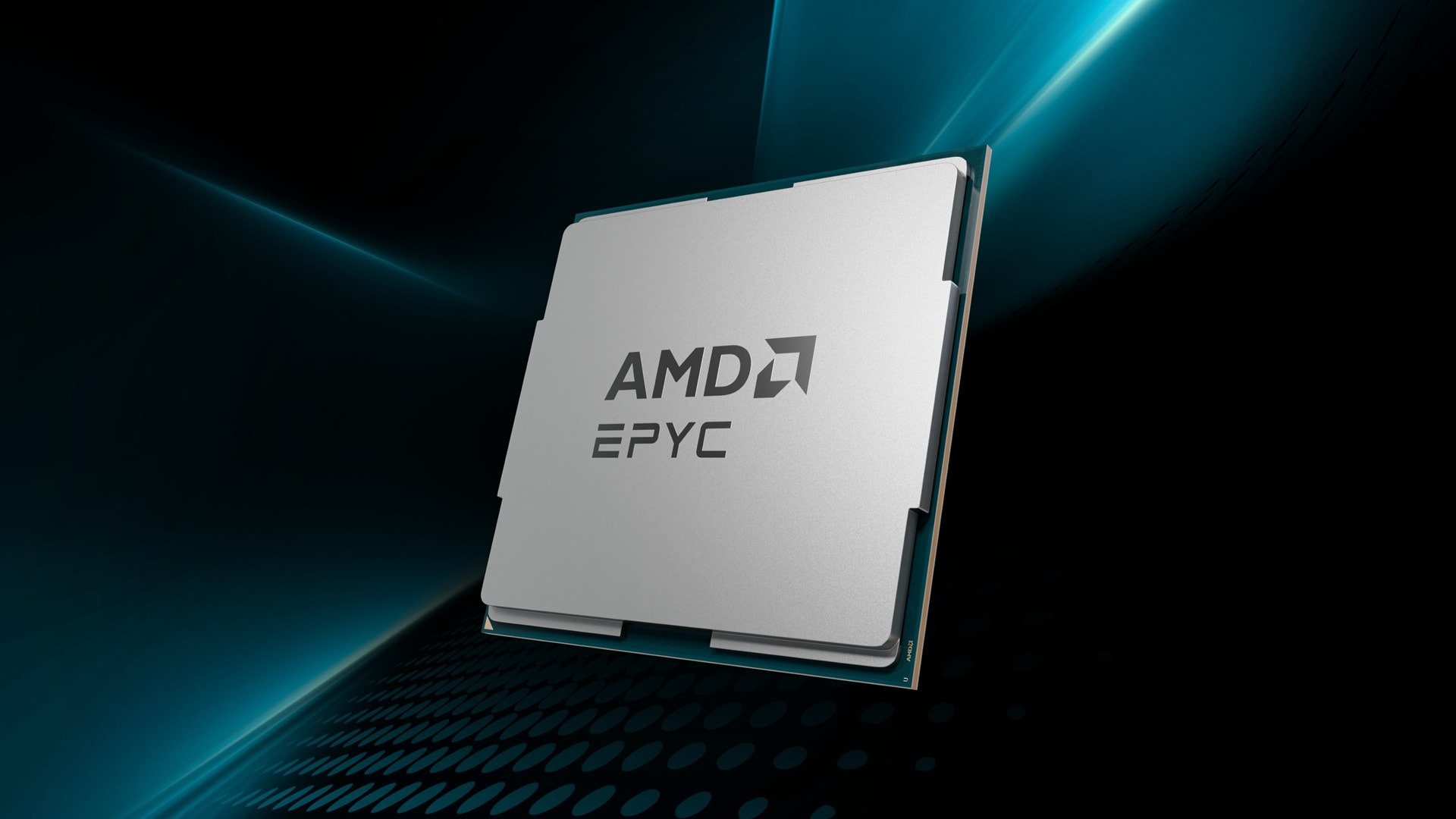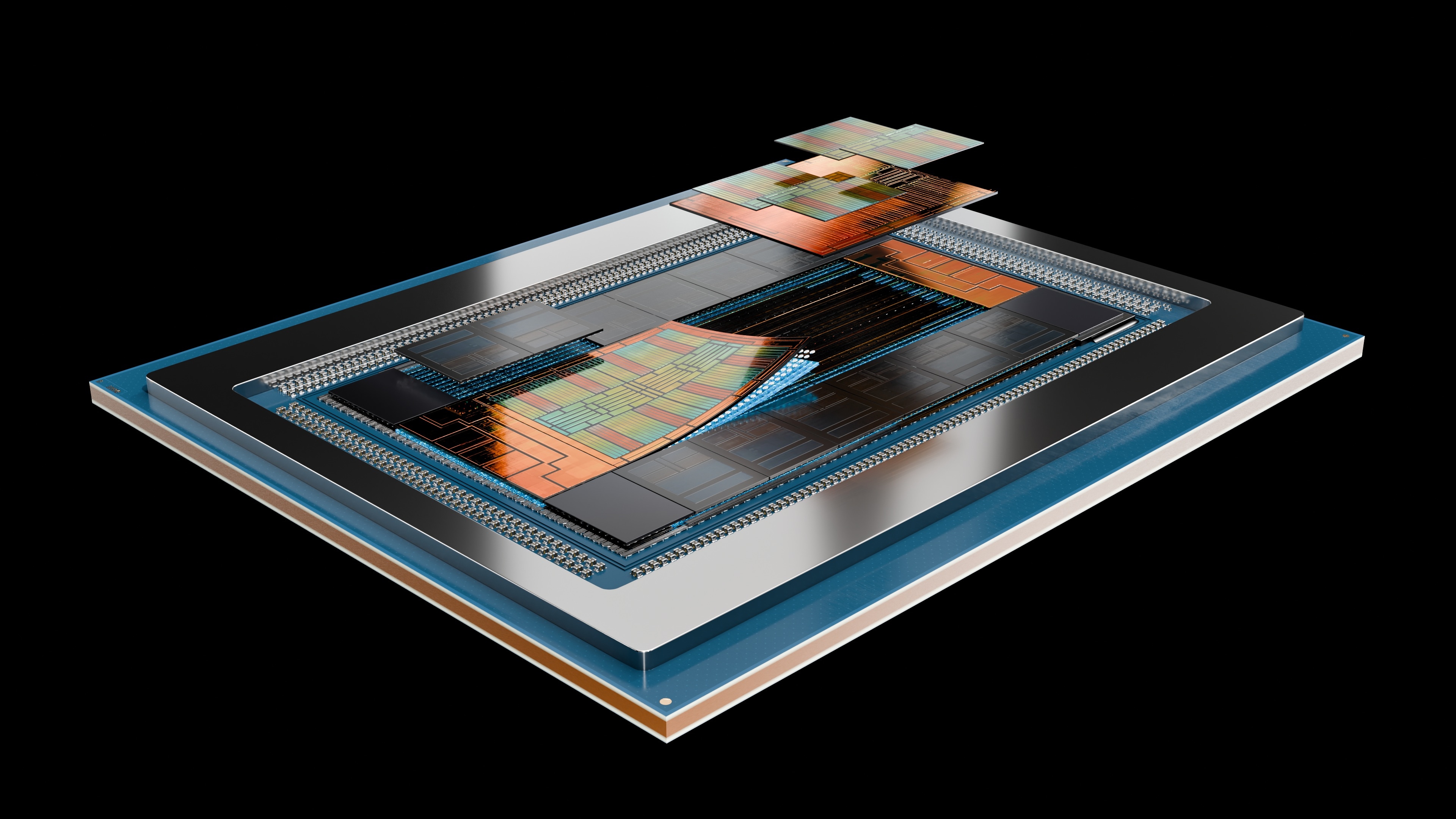
What’s the News? AMD is advancing the AMD Instinct™ MI400 Series GPU portfolio with updates spanning scientific computing and AI. AMD is sharing additional details on AMD Instinct™ MI430X GPUs for high-performance computing and AI for science, alongside new measured inference results for the AMD Instinct™ MI455X GPU on the AMD Helios™ rackscale solution. AMD is also introducing the AMD Instinct™ MI450X GPU, giving AMD Helios customers another option to match memory capacity with their AI workloads and deployment needs.
Why It Matters? Scientific simulation, frontier AI and interactive inference place different demands on infrastructure. MI400 Series GPUs address those needs with native double-precision compute for scientific applications, high-capacity memory for demanding AI models and additional configuration choices.
What’s the Role of AMD?
“AMD Instinct MI400 Series GPUs bring leadership performance and new capabilities to AI and scientific computing. With advances in high-precision compute, new milestones in AI inference performance and an expanded range of configurations, we’re giving customers more options to power their next generation of AI and HPC workloads.”
How Does MI430X Support Scientific Computing? The AMD Instinct MI430X GPU is designed for workloads that bring together high-precision simulation and AI. Its native FP64 capabilities support demanding scientific calculations, while 432 gigabytes (GB) of HBM4 memory and up to 23.3 terabytes per second of memory bandwidth help researchers work with larger simulations and datasets.
AMD is sharing a closer look at the role of native double precision in scientific computing. New AMD research examines 47 workload configurations across 11 applications and benchmarks, exploring where FP64 emulation can help and where scientific codes depend on native double-precision compute. The findings reinforce the focus on supporting the varied computational demands of HPC and AI for science with the AMD Instinct MI430X GPU.
More: "Exascale Was the Beginning: AMD Instinct MI430X GPUs"
How Is MI455X Advancing AI Performance? New AMD testing demonstrates leadership inference performance on MI455X powering AMD Helios delivering 21,333 tokens per second per GPU on DeepSeek-R1 using an MLPerf Inference Offline configuration – resulting in up to 30% higher throughput than the Nvidia Vera Rubin latest published MLPerf offline result.1
AMD Helios further extends its infrastructure leadership with up to 20% higher HBM bandwidth2 and higher scale-up bandwidth than Nvidia Vera Rubin,3 enabling the inference performance demonstrated in these results.
More: AMD Helios rackscale solution (AMD.com)
What is the MI450X? AMD is expanding the AMD Instinct MI400 Series portfolio with the new AMD Instinct MI450X GPU, giving AMD Helios customers greater flexibility with an additional choice to match their AI workloads and deployment needs. MI450X offers 288 GB of HBM4 memory per GPU while delivering the same core compute, memory bandwidth and scale-up and scale-out connectivity capabilities as MI455X.
Built on the AMD flexible compute architecture and open foundation, MI450X illustrates how AMD quickly responds to evolving customer requirements while streamlining bring-up and integration for ecosystem partners.
For workloads that fit within its memory capacity, MI450X provides another option to meet throughput and response-time targets while optimizing operating expenses. For AMD Helios deployments, customers can select MI450X or MI455X GPUs, with both supported by the same open rack-scale architecture and AMD ROCm™ software foundation, while the MI455X GPU provides additional memory headroom for larger models, longer contexts or higher concurrency.
More: AMD Instinct MI450X GPU (AMD.com)
Editor's Note: Information related to AMD Instinct MI430X GPUs was added to this post after it was originally published.
-
Based on testing conducted by AMD Performance Labs in October 2026, the AMD Instinct™ MI455X GPU achieved DeepSeek-R1 inference throughput of 21,333 tokens per second per GPU on an AMD-tested MLPerf Inference Offline configuration compared to the published MLPerf Inference v6.1 results for Nvidia Vera Rubin NVL72, Closed Division. Results retrieved from www.mlcommons.org on Nov 11, 2026. NVIDIA platform results from the following entries: 6.1-0106. The MLPerf name and logo are registered and unregistered trademarks of MLCommons Association in the United States and other countries. All rights reserved. Unauthorized use is strictly prohibited. See www.mlcommons.org for more information. System manufacturers may vary configurations, yielding different results. Results may vary based on model, configurations, software versions and other factors. MI400-031a.
-
Calculations by AMD Performance Labs in November 2026, based on published memory capacity and memory bandwidth of AMD Instinct™ MI455X vs. the published memory capacity and the current memory bandwidth specifications of a NVIDIA Vera Rubin GPU. System manufacturers may vary configurations, yielding different results. MI400-004a.
-
Calculations by AMD Performance Labs in June 2026, based on published scale-up bandwidth specification of an AMD Instinct™ MI455X GPU vs. published scale-up bandwidth specification of an NVIDIA Vera Rubin GPU. System manufacturers may vary configurations, yielding different results. MI400-013.
Press inquiries: corporate.pressinquiry@amd.com