AAI 2026: AMD Delivers Leadership Heterogeneous Compute for Physical AI
AMD extends the Ryzen AI Embedded processor family combining CPU, GPU and NPU acceleration to power robotics, industrial automation and intelligent embedded systems.
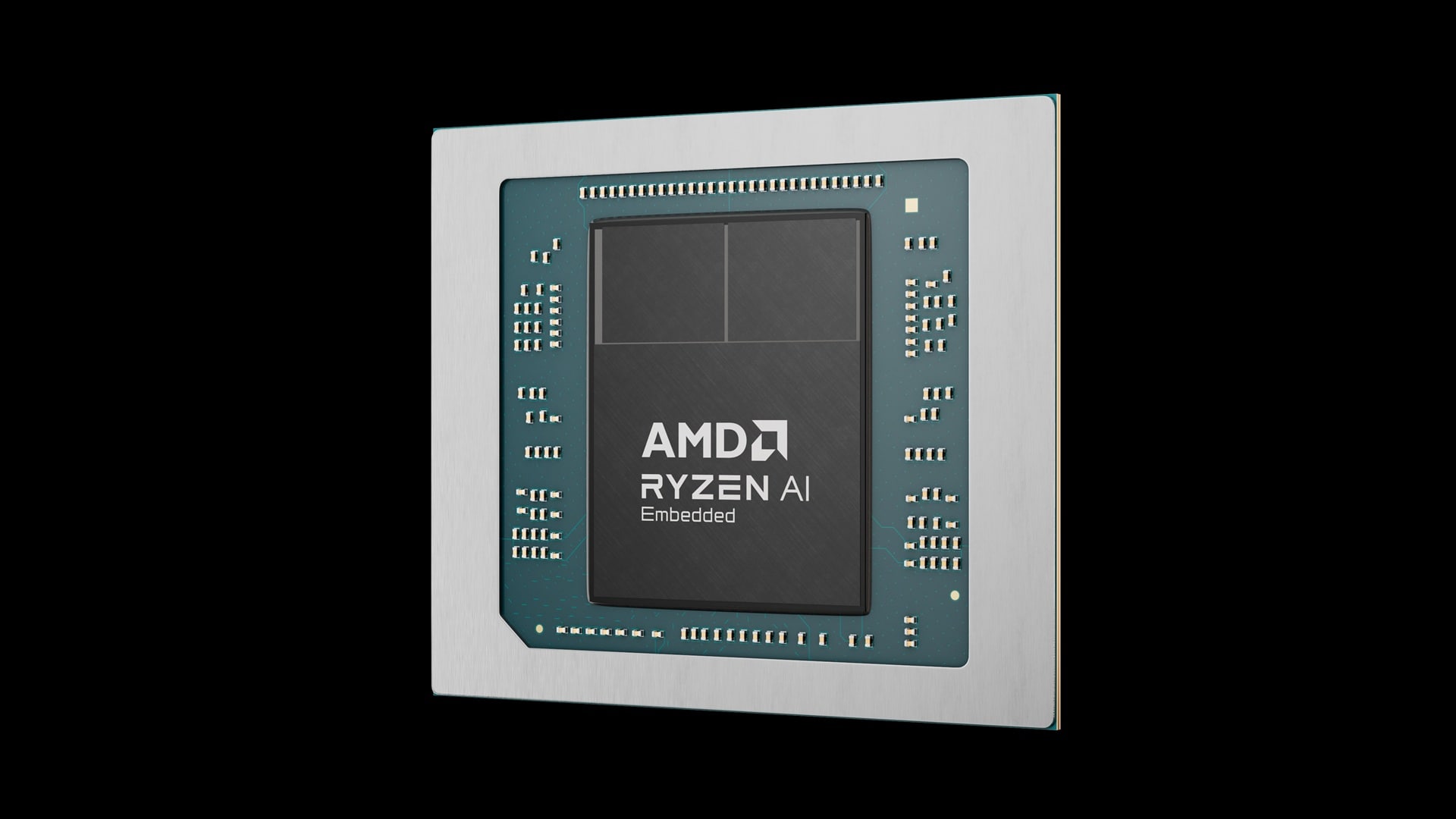
What's the News? AMD today announced the AMD Ryzen™ AI Embedded X100 Series processors, delivering leadership performance for the demands of physical AI. Designed to accelerate perception, reasoning and real-time control workloads, these processors integrate up to 16 high-performance AMD “Zen 5” CPU cores, a discrete-class integrated GPU and power-efficient NPU on a single embedded SoC. While each compute engine delivers exceptional stand-alone performance, a unified memory architecture accelerates real-world workloads for increased determinism and low latency. The Ryzen AI Embedded X100 Series is optimized for physical AI applications such as robotics, industrial automation, healthcare, aerospace and defense, and other intelligent real-time embedded systems.
Why It Matters? Physical AI systems require more than just theoretical AI performance. They must deliver deterministic real-time control, orchestration of AI workloads and industrial-grade reliability while operating within strict power, thermal and space constraints. Ryzen AI Embedded X100 Series processors enable autonomous systems to reliably perceive, reason and act within their environments fast enough for demanding use cases like humanoids, smart manufacturing, surgical robotics and unmanned systems.
What’s the Role for AMD?
The Ryzen AI Embedded X100 Series marks an exciting new chapter for physical AI, unlocking opportunities across a broad range of intelligent, real-time embedded applications. By delivering leadership CPU, GPU and NPU performance, combined with embedded-specific features, an open software ecosystem and industrial-grade reliability, AMD Ryzen AI Embedded X100 Series simplifies development and helps customers bring increasingly capable next-generation autonomous systems to market faster.
What Do Ryzen AI Embedded X100 Processors Deliver? X100 series processors offer leadership compute across CPU, graphics and AI workloads. They are expected to deliver up to 2.1x higher multithread CPU performance (CoreMark®)1 for massive concurrency, an expected 1.7x graphics performance uplift (OpenGL®)2 for more immersive experiences and 3.5x higher token generation throughput3 with 1.4x faster time-to-first-token (TTFT)3 for accelerating physical AI workloads compared to Intel® Core Ultra Series 3 processors. For applications demanding high signal processing with low power and small size, Ryzen AI Embedded X100 Series processors deliver up to 3x higher peak FP32 performance compared to Nvidia Jetson T5000 for superior signal processing and an average 1.7x higher performance compared to discrete GPUs like Nvidia RTX™ 4000 Ada4 on workloads such as beamforming for advanced medical ultrasound.
Powered by an open software stack, including Linux for application development, the AMD ROCm™ software stack for iGPU workload acceleration, Xen Hypervisor for virtualization and industry-standard AI frameworks like PyTorch, ONNX and TensorFlow, Ryzen AI Embedded X100 Series processors enable developers to build fast in familiar design environments. With tools to migrate existing codebases from CUDA to ROCm, developers get performance and flexibility without vendor lock-in.
The processors are designed for industrial-grade reliability, operating across a -40 to 105 C temperature range and supporting 24/7 operation for up to 10 years in harsh environments.
When will Ryzen AI Embedded X100 Series Processors be Available? Customer sampling of Ryzen AI Embedded X100 Series processors began in June 2026, with production availability expected in the fourth quarter of 2026. Customers can leverage AMD reference platforms for initial development and quickly move to production with system-on-modules from launch partners including Arbor, Congatec, iBase, IEI, Sapphire and Seavo.
More:
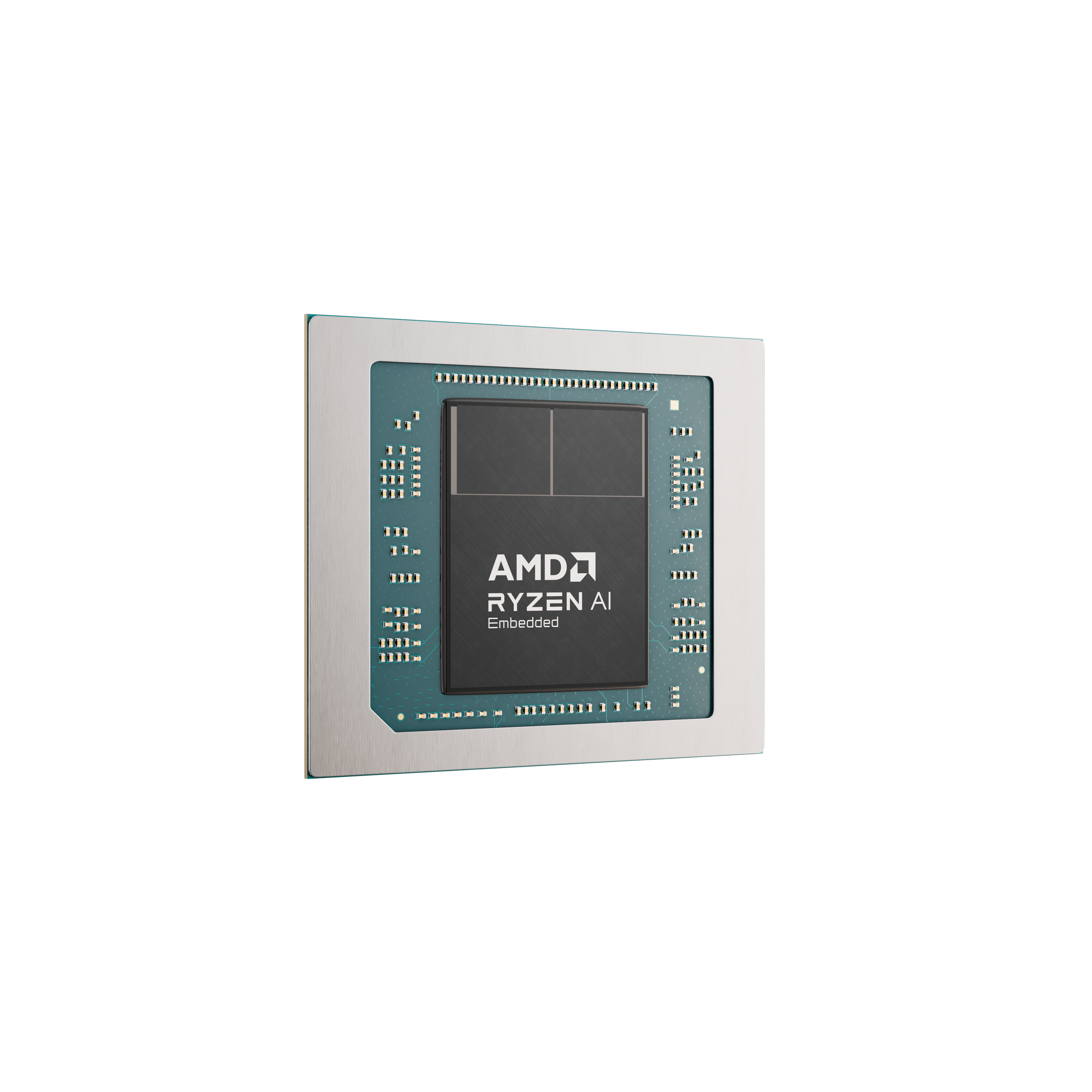
A close-up rendering shows an AMD Ryzen AI Embedded X100 Series processor. The processor family optimized for physical AI applications was announced at Advancing AI 2026. (Credit: AMD)
A close-up rendering shows an AMD Ryzen AI Embedded X100 Series processor. The processor family optimized for physical AI applications was announced at Advancing AI 2026. (Credit: AMD)
A close-up rendering shows an AMD Ryzen AI Embedded X100 Series processor. The processor family optimized for physical AI applications was announced at Advancing AI 2026. (Credit: AMD)


Cautionary Statement
This blog may contain forward-looking statements concerning Advanced Micro Devices, Inc. (AMD), which are made pursuant to the Safe Harbor provisions of the Private Securities Litigation Reform Act of 1995. Forward-looking statements are commonly identified by words such as "would," "may," "expects," "believes," "plans," "intends," "projects" and other terms with similar meaning. Investors are cautioned that any forward-looking statements in this blog are based on current beliefs, assumptions and expectations, speak only as of the date of this blog and involve risks and uncertainties that could cause actual results to differ materially from current expectations. Such statements are subject to certain known and unknown risks and uncertainties, many of which are difficult to predict and generally beyond AMD's control, that could cause actual results and other future events to differ materially from those expressed in, or implied or projected by, the forward-looking information and statements. Investors are urged to review in detail the risks and uncertainties in AMD’s Securities and Exchange Commission filings, including but not limited to AMD’s most recent reports on Forms 10-K and 10-Q.
AMD does not assume, and hereby disclaims, any obligation to update forward-looking statements made in this blog, except as may be required by law.
-
Measurements and projections conducted by AMD as of May 2026 on an AMD Ryzen AI Max+ 395 processor (OPN 100-000002199) configured to reflect Ryzen AI Embedded X199 specifications (AMD Maple CRB, 5.1 GHz CPU, 2.9 GHz GPU, with sustained operation at 45W TDP/sPPT/fPPT, STAPM disabled and 64 GB soldered LPDDR5X-8000), compared to an Intel Core Ultra X7 358H (MSI Prestige 16 Flip AI+ C3MTG MS-2622, 5.1 GHz CPU, 2.5 GHz GPU, PL1 = 45W, PL2 = 64W, MSI BIOS E2622IMS.10E, 32 GB LPDDR5X-8533, measured 30W OEM Sustained Power Limit). Results reflect projected relative CoreMark v1.01 multi-thread performance on Ubuntu 24.04, comparing measured AMD performance at 45W sustained power to 45W Intel performance projected from 30W sustained power measurements, using scaling factors derived from public benchmark data for the 358H. System manufacturers may vary configurations, yielding different results. Results may vary based on configuration, settings, usage, and other factors. (REX-007)
-
Measurements and projections conducted by AMD as of May 2026 on an AMD Ryzen AI Max+ 395 processor (OPN 100-000002199) configured to reflect Ryzen AI Embedded X199 specifications (AMD Maple CRB, 5.1 GHz CPU, 2.9 GHz GPU, with sustained operation at 45W TDP/sPPT/fPPT, STAPM disabled and 64 GB soldered LPDDR5X-8000), compared to an Intel Core Ultra X7 358H (MSI Prestige 16 Flip AI+ C3MTG MS-2622, 5.1 GHz CPU, 2.5 GHz GPU, PL1 = 45W, PL2 = 64W, MSI BIOS E2622IMS.10E, 32 GB LPDDR5X-8533, measured 30W OEM Sustained Power Limit). Results reflect the relative geomean of offscreen OpenGL frame rates from GFXBench 5.0.0 on Ubuntu 24.04, comparing measured AMD performance at 45W sustained power to 45W Intel performance projected from 30W sustained power measurements, using scaling factors derived from public benchmark data for the 358H. System manufacturers may vary configurations, yielding different results. Results may vary based on configuration, settings, usage, and other factors. (REX-003)
-
Based on AMD internal testing as of July 2026, an AMD Ryzen AI Max+ 395 processor, configured to reflect Ryzen AI Embedded X199 specifications (AMD Maple CRB, 5.1 GHz CPU, 2.9 GHz GPU, with sustained operation at 45W TDP/sPPT/fPPT, and 64 GB soldered LPDDR5X-8000) was used to measure inference throughput. Results are compared against Intel Core Ultra X7 358H (MSI Prestige 16 Flip AI+ C3MTG MS-2622, 5.1 GHz CPU, 2.5 GHz GPU, PL1 = 45W, PL2 = 64W, MSI BIOS E2622IMS.10E, 32 GB LPDDR5X-8533, performance mode), and reflect the geometric mean of llama-bench (build: llama-b9453-vulkan) performance across gemma4 26B.A4B MXFP4 MoE, gemma4 26B.A4B Q4_K - Medium, Llama 3.1 8B Q4_K - Medium, qwen35 27B Q4_K - Medium, qwen35moe 35B.A3B MXFP4 MoE, qwen35moe 35B.A3B Q4_K - Medium models. All models fit in <24 GB RAM. System manufacturers may vary configurations, yielding different results. Results may vary based on configuration, settings, usage, and other factors. (REX-017)
-
Based on Internal testing by AMD as of July 2026. Ryzen AI X199 performance evaluated using AMD Ryzen AI Max+ PRO 395 and AMD Radeon 8060S graphics as a proxy, configured with 128 GB of LPDDR5x 8000 MT/s memory, compared to a system configured with AMD Ryzen 7 9800X3D CPU and a discrete NVIDIA RTX 4000 SFF Ada GPU with 20 GB GDDR6 VRAM. Both configurations running Ubuntu Linux 24.04.3 with Container OS Debian GNU/Linux 13 with Vulkan for GPU acceleration. Beamforming performance compares total time from RF data copy to Display for systems with 128 channels at 50mm scan depth and varying scan angles. 1.7x calculated as the average time improvement across multiple scan types including Planewave Hyperechoic Scatterers, Planewave Hypoechoic, Planewave Carotid Cross, Planewave Carotid Long, and Planewave Simulation Resolution Distortion. System manufacturers may vary configurations, yielding different results. Results may vary. (REX-015)
Press inquiries: corporate.pressinquiry@amd.com
More from this category
 Embedded
AAI 2026: New AMD Open Robotics Partner Network for Physical AI Development
Expanded open ecosystem of software developers, AI model providers, robotics technologies, hardware partners and industry groups accelerates path to production for AMD platform-powered robotics.
 Embedded
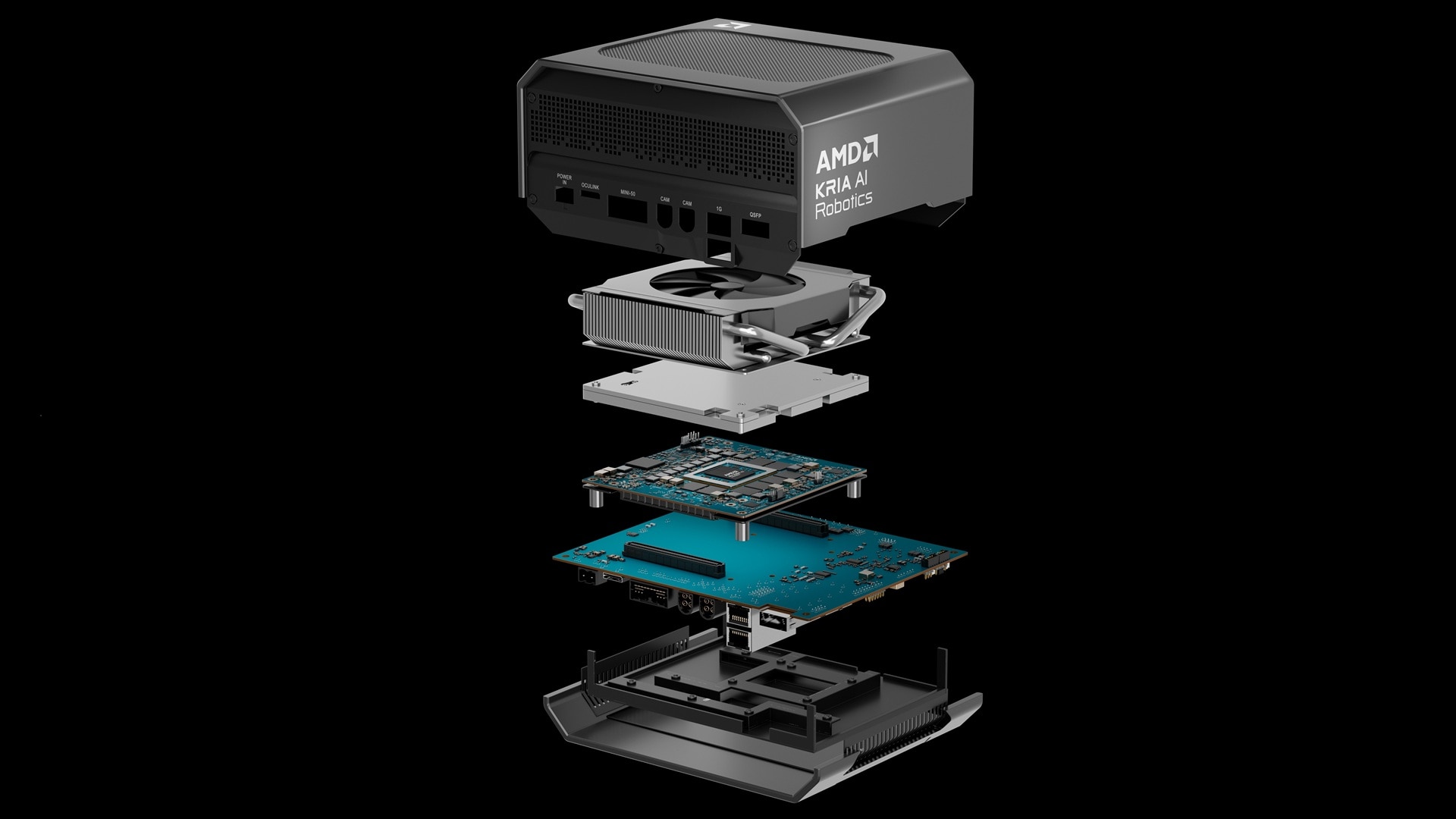
AAI 2026: AMD Introduces Open, Turnkey Integrated Platform for Physical AI
AMD Kria AI solutions extend robotics capabilities from body to brain and combine the Kria AI SOM, robotics developer platform and open software ecosystem to accelerate physical AI.
 Embedded
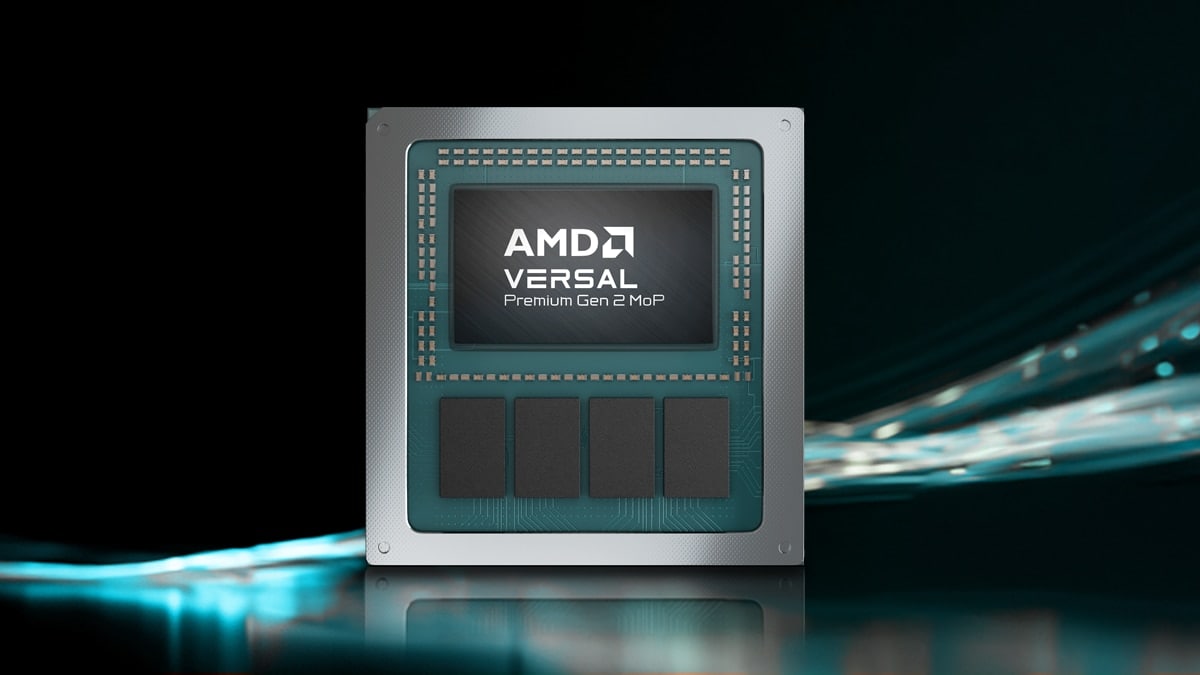
AMD Packs More Memory Capacity, Performance in a Smaller Design with Versal Premium Gen 2 Memory on Package
The AMD adaptive SoCs integrate up to 32 GB of LPDDR5X to boost bandwidth, reduce board space and speed development for AI, networking, aerospace and defense applications.
 Embedded
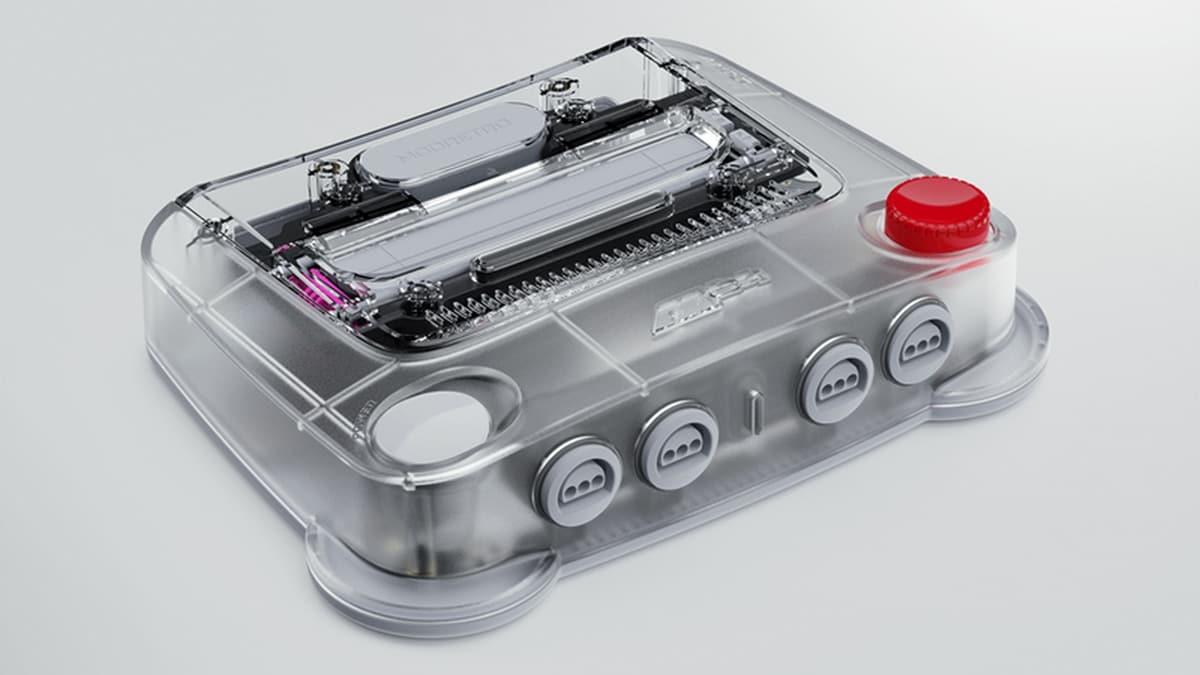
AMD FPGAs Help ModRetro Bring Retro Gaming Back to Life with M64 Console
ModRetro brings an authentic Nintendo N64-compatible gaming experience to a new generation of gamers by leveraging AMD Artix UltraScale+ FPGAs in its new M64 console.