AMD Introduces Ryzen AI Embedded Processor Portfolio, Powering AI-Driven Immersive Experiences in Automotive, Industrial and Physical AI
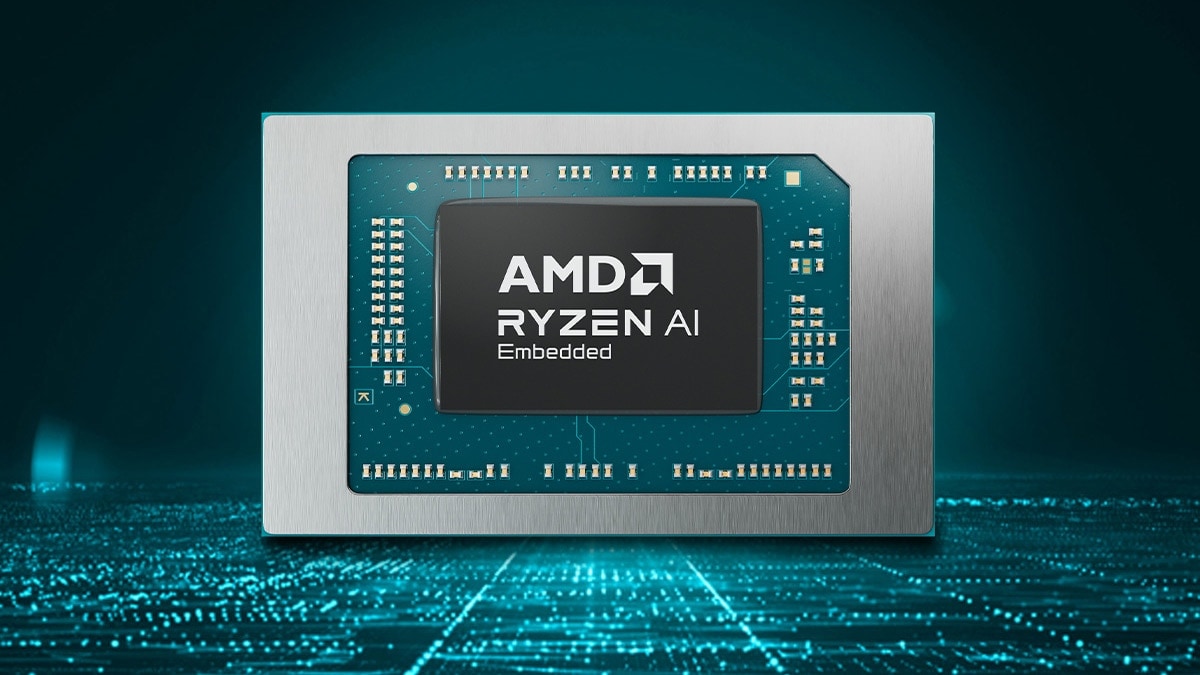
AMD introduces the AMD Ryzen AI Embedded processors, a new portfolio of embedded x86 processors designed to power AI-driven applications at the edge.
News Highlights
New AMD Ryzen™ AI Embedded P100 and X100 Series processors combine high-performance “Zen 5” CPU cores, an AMD RDNA™ 3.5 GPU and an AMD XDNA™ 2 NPU for low-power AI acceleration.
Delivers energy-efficient, low-latency AI on a single chip for immersive in-vehicle experiences, industrial automation and physical AI for autonomous systems.
Launching today, the Ryzen AI Embedded P100 Series processors featuring 4-6 CPU cores, estimated 35% faster GPU performance,1 and up to 50 AI TOPS.2
SANTA CLARA, Calif., Jan. 05, 2026 (GLOBE NEWSWIRE) -- Today, AMD (NASDAQ: AMD) introduced the AMD Ryzen™ AI Embedded processors, a new portfolio of embedded x86 processors designed to power AI-driven applications at the edge. From automotive digital cockpits and smart healthcare to physical AI for autonomous systems, including humanoid robotics, the new P100 and X100 Series processors provide OEMs, tier-1 suppliers and system and software developers in automotive and industrial markets with high performance, efficient AI compute in a compact BGA (ball grid array) package for the most constrained embedded systems.
The processors integrate the high-performance “Zen 5” core architecture for scalable x86 performance and deterministic control, an RDNA 3.5 GPU for real-time visualization and graphics, and an XDNA 2 NPU for low-latency, low-power AI acceleration – all in a single chip.
“As industries push for more immersive AI experiences and faster on-device intelligence, they need high performance without added system complexity,” said Salil Raje, senior vice president and general manager, AMD Embedded. “The Ryzen AI Embedded portfolio brings leadership CPU, GPU and NPU capabilities together in a single device, enabling smarter, more responsive automotive, industrial, and autonomous systems.”
The portfolio includes the P100 Series processors, targeting in-vehicle experiences and industrial automation, and the X100 Series processors featuring higher CPU core counts and AI TOPS performance for more demanding physical AI and autonomous systems.
Purpose-Built for In-Vehicle Experiences
Launching today, P100 Series processors featuring 4-6 cores are optimized for next-generation digital cockpits and HMI (human-machine interfaces), enabling real-time graphics for in-vehicle infotainment displays, AI-driven interactions, and multi-domain responsiveness. They deliver up to a 2.2x multi-thread and single-thread performance boost over the previous generation,3 ensuring deterministic control in a compact 25×40 mm BGA package. With a 15–54-watt operating range and support for –40°C to +105°C environments, it is built for harsh, power- and space-constrained edge systems and 10-year life cycles.
Immersive Graphics and On-Device AI Acceleration
The P100 Series processors integrate an RDNA 3.5 GPU, delivering an estimated 35% faster rendering1 to power up to four 4K (or two 8K) digital displays simultaneously at 120 frames per second. The AMD video codec engine enables high-fidelity, low latency streaming and responsive playback without burdening the CPU.
The next generation AMD XDNA 2 NPU delivers up to 50 TOPS, for up to 3x higher AI inference performance.4 XDNA 2 architecture combines understanding of voice, gestures and environmental cues using supported AI models including vision transformers, compact LLMs and CNNs.
Open, Safe Software Stack for Faster System Design
Ryzen AI Embedded processors provide a consistent development environment with a unified software stack that spans the CPU, GPU, and NPU. At the runtime layer, developers benefit from optimized CPU libraries, open-standard GPU APIs, and a native XDNA architecture AI runtime enabled through Ryzen AI Software.
The entire software stack is built on the open-source, Xen hypervisor-based virtualization framework that securely isolates multiple operating system domains. This enables Yocto or Ubuntu to power the HMI, FreeRTOS to manage real-time control, and Android or Windows to support richer applications, all running safely in parallel. With an open-source foundation, long-term OS support, and an ASIL-B capable architecture, they help customers reduce costs, simplify customization, and accelerate the path to production for automotive and industrial systems.
AMD Ryzen AI Embedded | INDUSTRIAL TEMP | AUTOMOTIVE GRADE | |||||
Model # | P121 | P132 | P121i | P132i | P122a | P132a | |
CPU | “Zen 5” CPU Cores | 4 | 6 | 4 | 6 | 4 | 6 |
Max Frequency5 | Up to 4.4 GHz | Up to 4.5 GHz | Up to 4.4 GHz | Up to 4.5 GHz | Up to 3.65 GHz | Up to3.65 GHz | |
L3 Shared Cache | 8 MB | 8 MB | 8 MB | 8 MB | 8 MB | 8 MB | |
GPU | Work Group Processors | 1 | 2 | 1 | 2 | 2 | 2 |
4K120/8Kp120 Displays | 4 / 2 | 4 / 2 | 4 / 2 | 4 / 2 | 4 / 2 | 4 / 2 | |
GPU Max Frequency6 | 2.7 GHz | 2.8 GHz | 2.7 GHz | 2.8 GHz | 2.0 GHz | 2.4 GHz | |
NPU | TOPS2 | 30 | 50 | 30 | 50 | 30 | 50 |
I/O | 10GE Ports w/TSN | 2 | 2 | 2 | 2 | 2 | 2 |
DDR5 (ECC) | 5600 MT/s | N/A | |||||
LPDDR5X (ECC) MT/s | 7500 MT/s | 8000 MT/s | 7500 MT/s | 8000 MT/s | 7500 MT/s w/RAS | 7500 MT/s w/RAS | |
USB 4.0 | 2x USB4 | N/A | |||||
Other USB | 1x USB 3.2 | 1x USB3.1 | 3x USB2 | 1x USB2 (Secure BIOS) | ||||||
Power & Thermal | Nominal TDP | 28 W | 28 W | 28 W | 28 W | 28 W | 45 W |
Nominal TDP | 15-54 W | 15-54 W | 15-54 W | 15-54 W | 15-30 W | 25-45 W | |
Junction Temperature | 0 to 105oC | 0 to 105oC | -40 to 1050C | -40 to 1050C | -40 to 1050C | -40 to 1050C | |
Package, | Package | 25 mm x 40 mm | |||||
Longevity | 2.5 Years (Standard) | Up to 10 Years (Extended) | AEC-Q100 |
Product Availability
AMD Ryzen AI Embedded P100 processors featuring 4-6 cores are sampling with early access customers. Tools and documentation are available with production shipments expected in the second quarter. P100 Series processors featuring 8-12 cores targeting industrial automation applications are expected to begin sampling in the first quarter. Sampling of X100 Series processors, which offer up to 16 cores, is expected to begin in the first half of this year.
-
AMD Ryzen™ AI Embedded P132a processor for Automotive delivers up to an estimated 35% higher performance on GFXBench 5.0.0 Vulkan 5 normal offscreen compared to Ryzen Embedded V2A46. Testing conducted by AMD Performance Labs as of November 2025 on the Ryzen AI Embedded P132a at 45 watts TDP using GFXBENCH 5.0.0 (Vulkan 5 normal offscreen subscore) and Ryzen Embedded V2A46 processor at 45 watts TDP using GFXBENCH 5.0.0 (Vulkan 5 normal offscreen subscore on a test system comprising: Ryzen AI Embedded P132a processor: AMD Reference JAGUAR Motherboard, 32 GB LPDDR5X-7500 Micron, Samsung 1TB 980 Pro, Linux Ubuntu 24.04.1 with Kernel 6.12, Coreboot BIOS RKJCB0080A, NVAS Release R5; Ryzen Embedded V2A46 processor: AMD Reference CRATER Motherboard, 32 GB LPDDR4-4266 Micron, Samsung 512 GB 970 Pro, Linux Ubuntu 22.04.1 with Kernel 6.1.49 LTS, Insyde Corp BIOS RCR1004A, SWREL12. (106 – 78.6)/78.6 = 35%. Results will vary based on configuration, settings, usage, and other factors. [REP=002]
-
Trillions of Operations per Second (TOPS) for an AMD Ryzen processor is the maximum number of operations per second that can be executed in an optimal scenario and may not be typical. TOPS may vary based on several factors, including the specific system configuration, AI model, and software version. [GD-243]
-
AMD Ryzen™ AI Embedded P132a processor platform for automotive delivers up to an estimated 84% higher single-thread performance and 125% higher multi-thread performance on SPECrate®2017_int_base compared to Ryzen Embedded V2A46. [REP-001]
-
AMD Ryzen™ AI Embedded P100 series processors has up to 3 times the TOPS performance when compared to Ryzen Embedded 8000 series processors. Based on AMD internal analysis as of November 2025. AMD Ryzen AI Embedded P100 Series has a 50 TOPS performance NPU. Ryzen Embedded 8000 has a 16 TOPS performance NPU. 50/16 = 3.125. [REP-003]
-
Boost Clock Frequency is the maximum frequency achievable on the CPU running a bursty workload. Boost clock achievability, frequency, and sustainability will vary based on several factors, including but not limited to: thermal conditions and variation in applications and workloads. [GD-150]
-
Boost Clock Frequency is the maximum frequency achievable on the Radeon GPU running a bursty workload. Boost clock achievability, frequency, and sustainability will vary based on several factors, including but not limited to: thermal conditions and variation in applications and workloads. [GD-151]
Press inquiries: corporate.pressinquiry@amd.com
More from this category
 Embedded
AMD Packs More Memory Capacity, Performance in a Smaller Design with Versal Premium Gen 2 Memory on Package
The AMD adaptive SoCs integrate up to 32 GB of LPDDR5X to boost bandwidth, reduce board space and speed development for AI, networking, aerospace and defense applications.
 Embedded
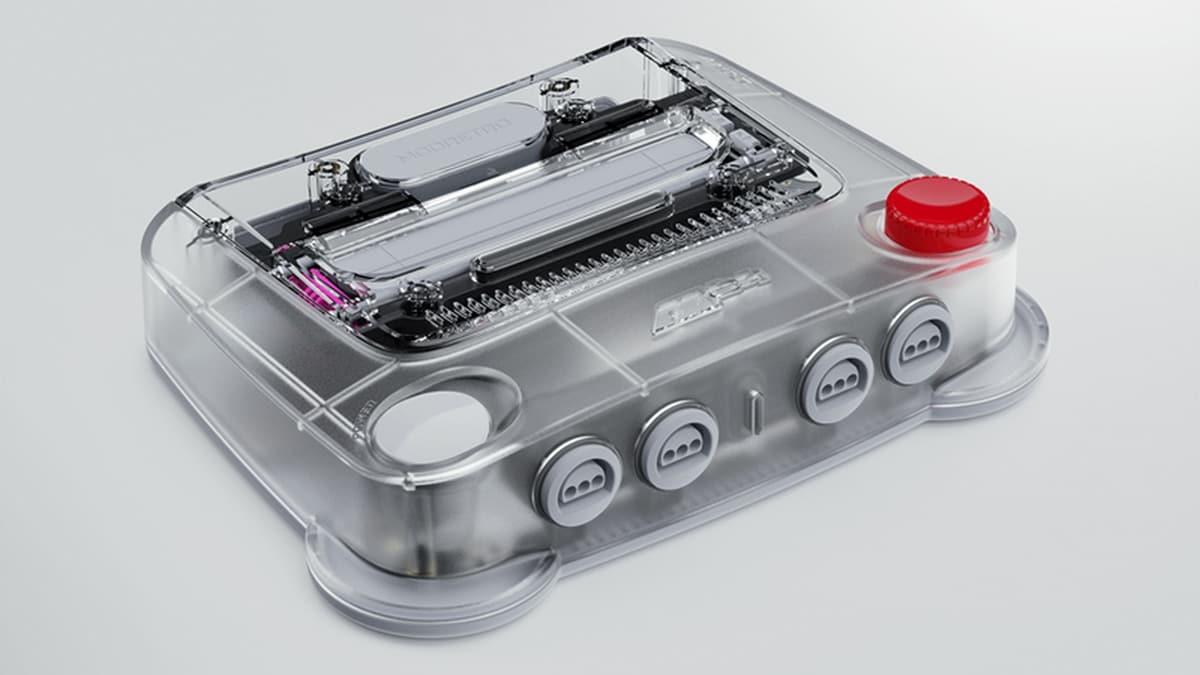
AMD FPGAs Help ModRetro Bring Retro Gaming Back to Life with M64 Console
ModRetro brings an authentic Nintendo N64-compatible gaming experience to a new generation of gamers by leveraging AMD Artix UltraScale+ FPGAs in its new M64 console.
 Embedded
AI in Space: Start at the Edge, Build for the Mission
We are taking what we’ve learned enabling AI at the edge and extending it to space workloads with holistic co-design across hardware, software and systems.
 Embedded
AMD Embedded+ Powers Fujisoft AI-Based Site Security System
Fujisoft is developing an AI-enhanced physical security system built on the AMD Embedded+ platform that integrates FPGA adaptability with x86 processing performance into a unified architecture.